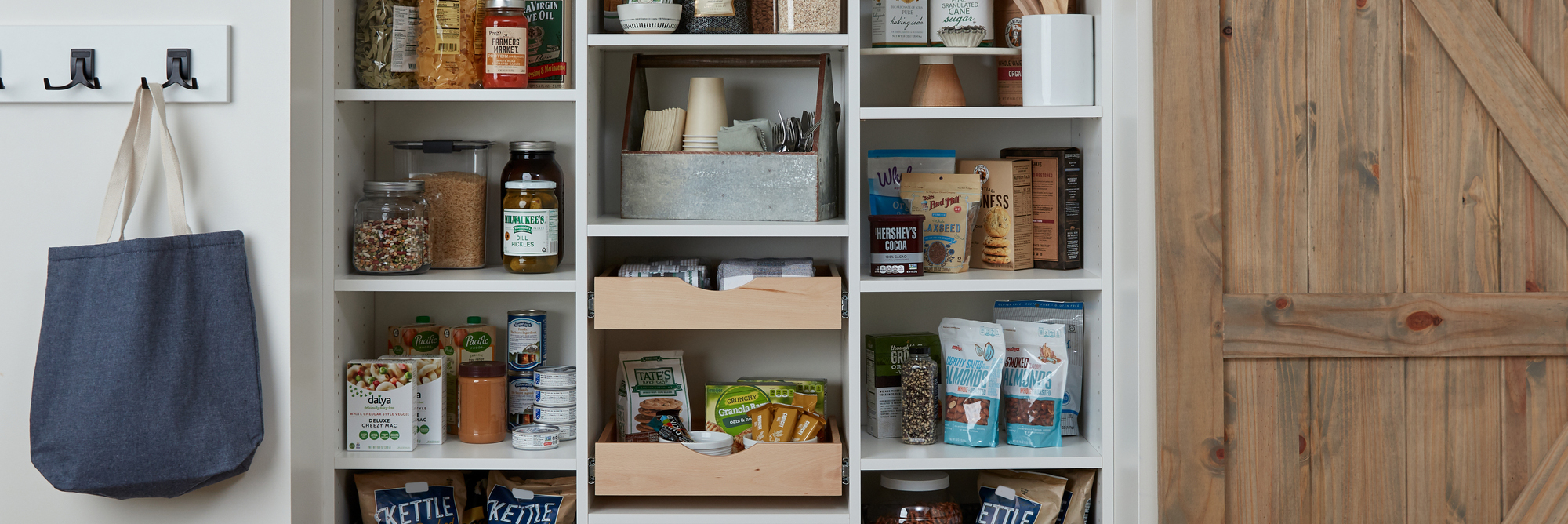
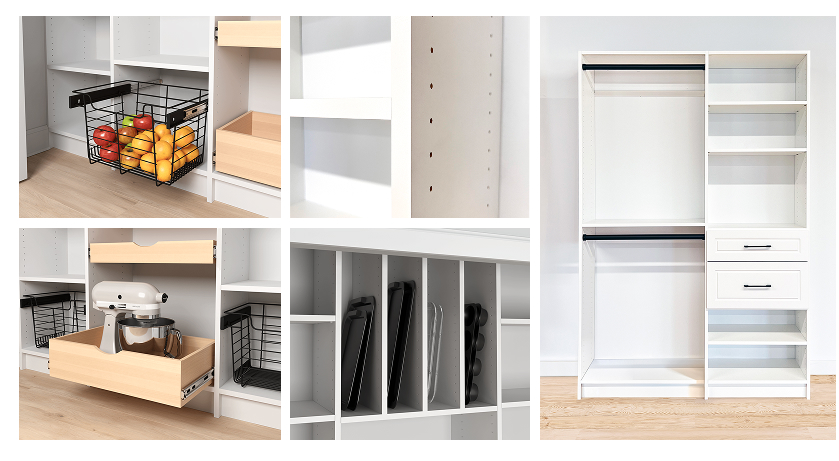
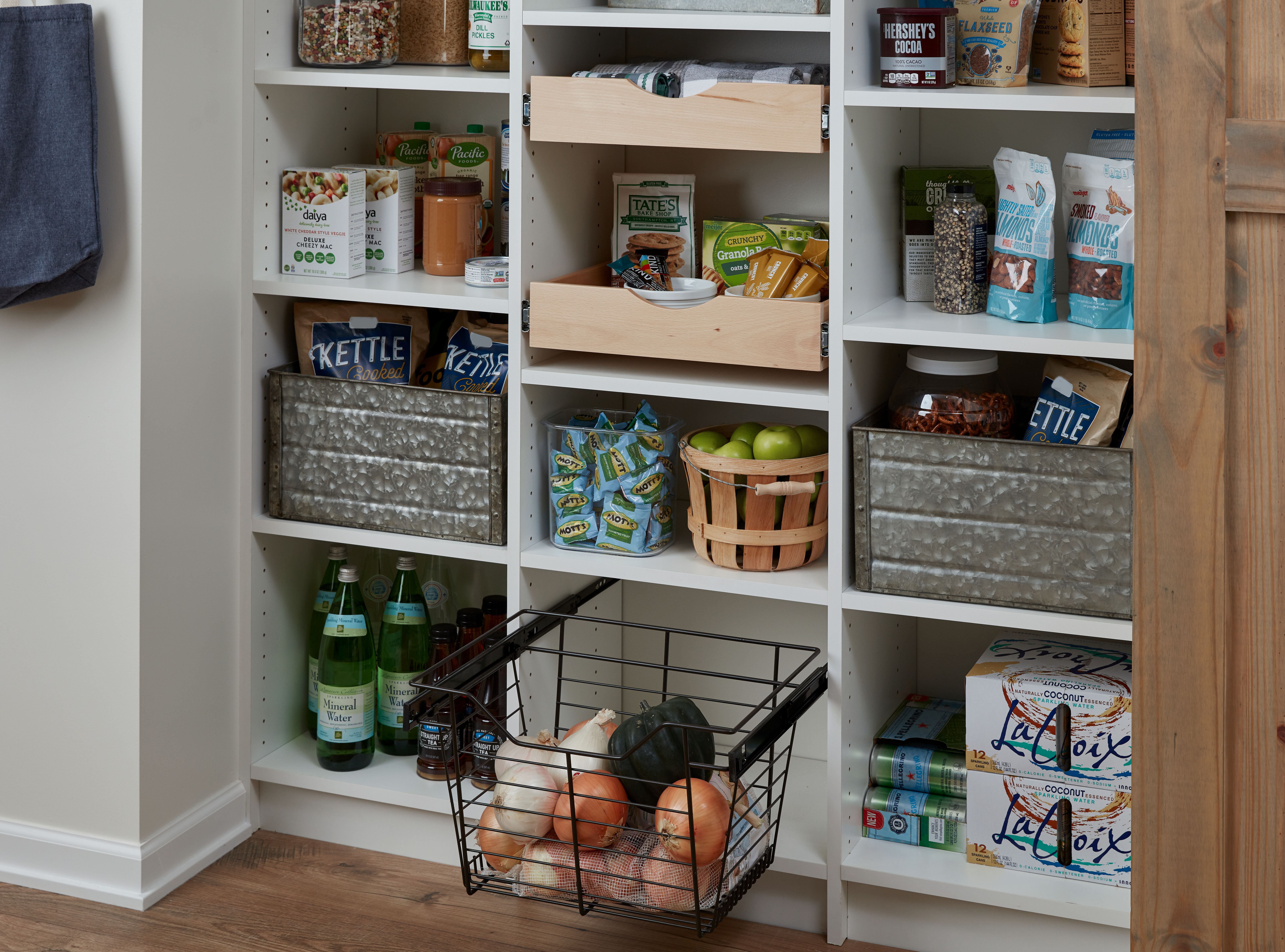
Now that you’ve taken inventory of your pantry items, you’ll have a better idea of which design features you’ll need to support them. Smart storage is key—especially in smaller pantry spaces. Whether you need open shelving to keep everyday staples in view or enclosed storage to tuck clutter away, there are plenty of ways to tailor your pantry to fit your lifestyle and the way you cook and shop.
- Wire Baskets – Keep produce and snacks visible and easy to grab.
- Beech Drawers – Add warmth and hidden storage for linens or baking tools.
- Tray Dividers – Keep pans, platters, and cutting boards upright and tidy.
- Floor-Mounted System – Built-in look with sturdy support for heavy items.
- Adjustable Shelves – Shift to fit your changing grocery hauls.
These are a few of our most popular pantry building blocks (all custom-cut to fit your unique space).
Now that you’ve taken inventory of your pantry items, you’ll have a better idea of which design features you’ll need to support them. Smart storage is key—especially in smaller pantry spaces. Whether you need open shelving to keep everyday staples in view or enclosed storage to tuck clutter away, there are plenty of ways to tailor your pantry to fit your lifestyle and the way you cook and shop.
- Wire Baskets – Keep produce and snacks visible and easy to grab.
- Beech Drawers – Add warmth and hidden storage for linens or baking tools.
- Tray Dividers – Keep pans, platters, and cutting boards upright and tidy.
- Floor-Mounted System – Built-in look with sturdy support for heavy items.
- Adjustable Shelves – Shift to fit your changing grocery hauls.
These are a few of our most popular pantry building blocks (all custom-cut to fit your unique space).
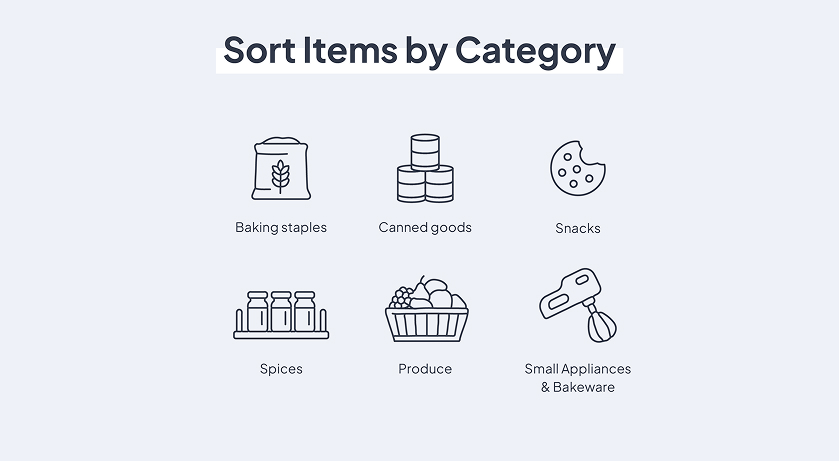
Start by pulling everything out and giving your pantry a clean slate. Toss anything expired or that you no longer use. To cut down on bulky packaging, transfer dry goods into clear, labeled containers to improve visibility and access. Then, sort your items into logical categories.
As you sort, take note of what you have the most of—this will help you determine which components will work best in your future pantry design. For example, lots of canned goods may call for extra open shelving or pull-out wire baskets, while an overflow of snacks or spices might be better stored in drawers or bins. Taking stock now ensures your new pantry is designed to support the way you actually live.
Start by pulling everything out and giving your pantry a clean slate. Toss anything expired or that you no longer use. To cut down on bulky packaging, transfer dry goods into clear, labeled containers to improve visibility and access. Then, sort your items into logical categories.
As you sort, take note of what you have the most of—this will help you determine which components will work best in your future pantry design. For example, lots of canned goods may call for extra open shelving or pull-out wire baskets, while an overflow of snacks or spices might be better stored in drawers or bins. Taking stock now ensures your new pantry is designed to support the way you actually live.
A beautifully organized pantry won’t stay that way without a little upkeep. Keep it under control with a few regular habits:
- Check your inventory weekly before grocery shopping.
- Deep clean seasonally to keep shelves clean and remove items that are no longer fresh.
- Use the FIFO method (First In, First Out) so older items get used before new ones.
Just a few minutes each week can go a long way in maintaining your progress.
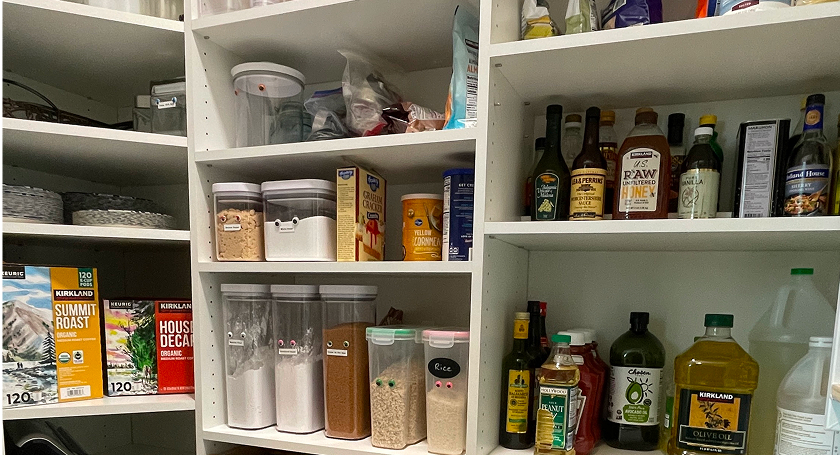
A beautifully organized pantry won’t stay that way without a little upkeep. Keep it under control with a few regular habits:
- Check your inventory weekly before grocery shopping.
- Deep clean seasonally to keep shelves clean and remove items that are no longer fresh.
- Use the FIFO method (First In, First Out) so older items get used before new ones.
Just a few minutes each week can go a long way in maintaining your progress.
With your new pantry system in place, it’s time to arrange your items in a way that works for you.
- Face labels outward so you can quickly scan your inventory and avoid overbuying.
- Keep everyday items at eye level so your most-used ingredients are always within easy reach.
- Group similar items together—like drinks, snacks, or baking supplies—to create intuitive zones that make daily use seamless.
- Give small appliances a home on lower shelves to free up counter space and keep your pantry looking tidy.
When everything has a place, your pantry works harder—and your daily routine gets a whole lot easier.
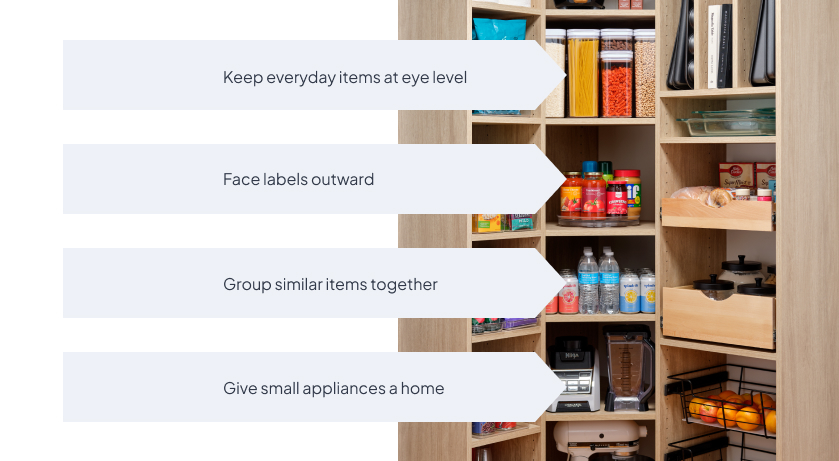
With your new pantry system in place, it’s time to arrange your items in a way that works for you.
- Face labels outward so you can quickly scan your inventory and avoid overbuying.
- Keep everyday items at eye level so your most-used ingredients are always within easy reach.
- Group similar items together—like drinks, snacks, or baking supplies—to create intuitive zones that make daily use seamless.
- Give small appliances a home on lower shelves to free up counter space and keep your pantry looking tidy.
When everything has a place, your pantry works harder—and your daily routine gets a whole lot easier.
Labels are more than just a nice finishing touch—they help everyone in the household know where things go and will keep your pantry organized over time. We recommend adding labels to clear jars or bins instead of placing labels on pantry shelves. That way, you can move things around over time if needed.
Try:
- DIY chalkboard labels or handwritten tags for a personal touch.
- Pre-made label sets for a uniform, polished look.
Whichever route you choose, labeling supports long-term pantry order and helps you stay on top of what you have.
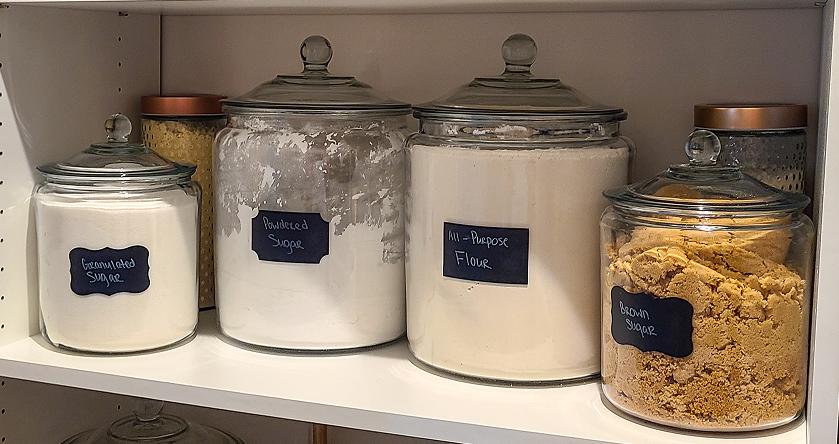
Labels are more than just a nice finishing touch—they help everyone in the household know where things go and will keep your pantry organized over time. We recommend adding labels to clear jars or bins instead of placing labels on pantry shelves. That way, you can move things around over time if needed.
Try:
- DIY chalkboard labels or handwritten tags for a personal touch.
- Pre-made label sets for a uniform, polished look.
Whichever route you choose, labeling supports long-term pantry order and helps you stay on top of what you have.
The Dies family needed a pantry that could keep up with their busy lifestyle. Their original space was packed from floor to ceiling, and the basic wire racks just couldn’t handle the load. Items were hard to find, and staying organized felt impossible—so they turned to EasyClosets for a smarter, more durable solution.
Working with Erna, one of our expert designers, they created a custom pantry featuring adjustable open shelving and beech drawers in a bright white finish. The result? A beautiful, functional space where everything has a dedicated home—making everyday routines simpler and more enjoyable.
[View more pantry success stories]
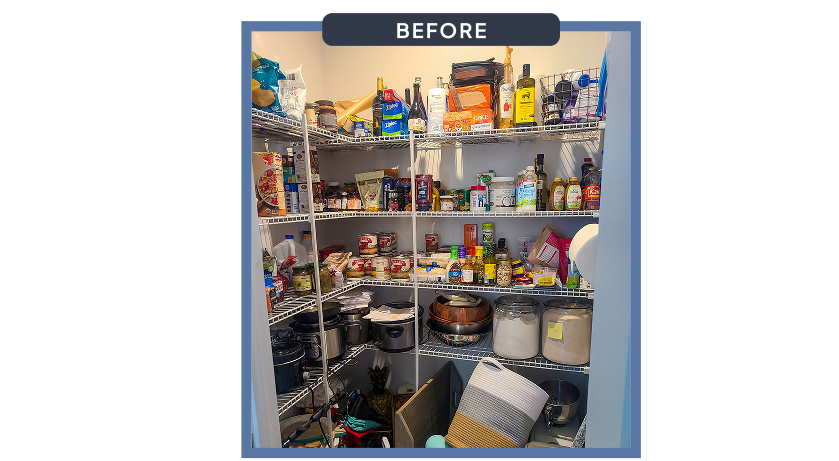
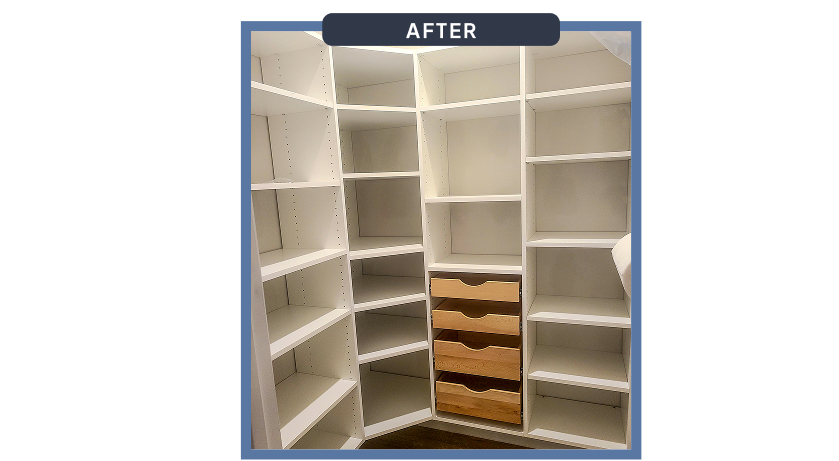
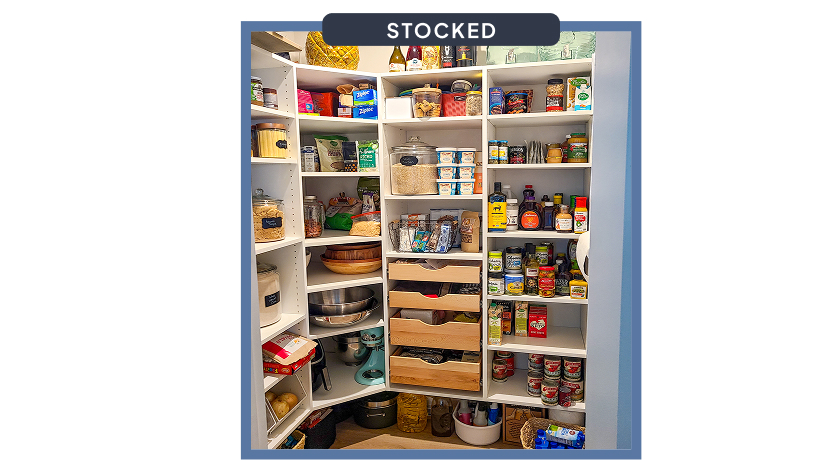
The Dies family needed a pantry that could keep up with their busy lifestyle. Their original space was packed from floor to ceiling, and the basic wire racks just couldn’t handle the load. Items were hard to find, and staying organized felt impossible—so they turned to EasyClosets for a smarter, more durable solution.
Working with Erna, one of our expert designers, they created a custom pantry featuring adjustable open shelving and beech drawers in a bright white finish. The result? A beautiful, functional space where everything has a dedicated home—making everyday routines simpler and more enjoyable.
[View more pantry success stories]
Even with the best intentions, some habits can undermine your pantry efforts. Here’s what to watch out for:
- Overbuying containers before assessing what you actually need.
- Mixing up categories, which makes it harder to find what you’re looking for.
- Storing everyday items out of reach, which adds frustration to your routine.
Learning how to organize a pantry doesn’t require a full kitchen remodel—just a few smart strategies and the right tools. From decluttering to labeling, these steps are designed to help you stay organized, save time, and make the most of your space. Whether you’re dealing with a spacious walk-in or a single cabinet, your dream pantry is within reach.
Start Designing Today