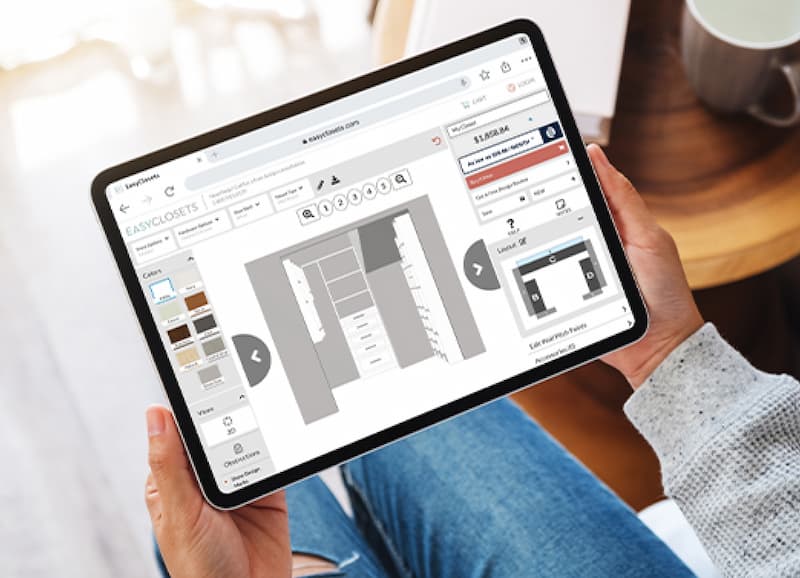
Assess Your Space and Needs
Before choosing finishes or features, start with how your entryway actually functions. A family of five will have very different needs than a single homeowner. The most successful entryway designs start by solving real, everyday challenges.
Take a step back and evaluate:
- How much space you have to work with
- Where your entryway is located (front door, garage entry, hallway, etc.)
- How many people use it daily
Then, think about your lifestyle:
- Do you need a mudroom-style setup for backpacks, sports gear, and shoes?
- Or a more minimal, guest-friendly entryway with hidden storage?
1. Bench Seating: Your Everyday Landing Spot
A bench creates a natural pause point as you enter or leave your home. It gives you a place to sit while putting on shoes, but it also does more behind the scenes:
- Keeps shoes contained (especially when paired with drawers or cubbies)
- Creates a visual “zone” for the entryway
- Acts as a drop-off spot for bags or packages
For busy households, this becomes one of the most-used features in the entire space.
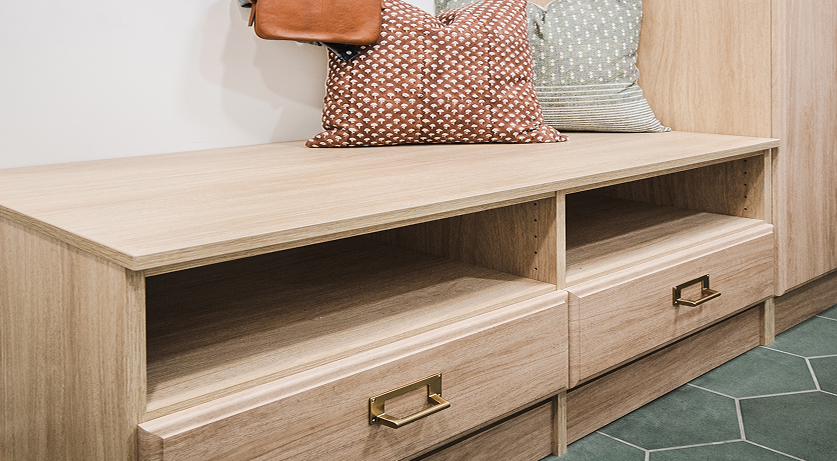
A bench creates a natural pause point as you enter or leave your home. It gives you a place to sit while putting on shoes, but it also does more behind the scenes:
- Keeps shoes contained (especially when paired with drawers or cubbies)
- Creates a visual “zone” for the entryway
- Acts as a drop-off spot for bags or packages
For busy households, this becomes one of the most-used features in the entire space.
2. Hooks: Quick, Grab-and-Go Storage
Hooks handle the items you reach for every day. Instead of opening doors or drawers, you can simply hang and go.
- Jackets, bags, and hats stay within easy reach
- Items dry and air out naturally
- Multiple heights make it functional for both kids and adults
This is one of the simplest ways to keep clutter off the floor without adding bulk.
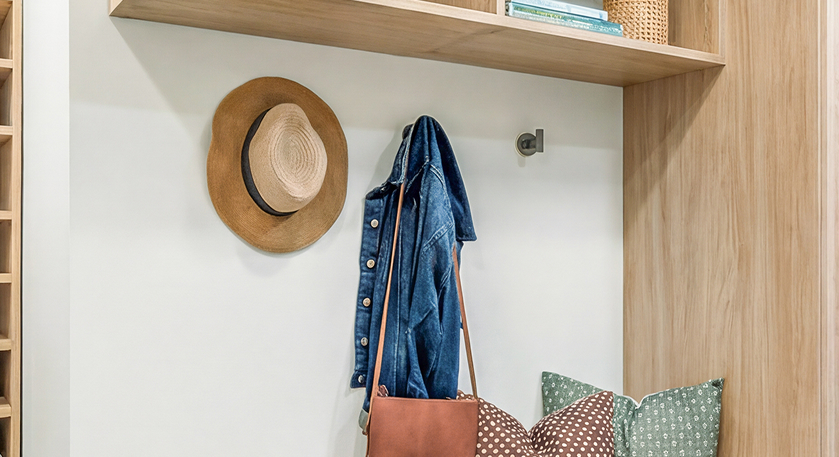
Hooks handle the items you reach for every day. Instead of opening doors or drawers, you can simply hang and go.
- Jackets, bags, and hats stay within easy reach
- Items dry and air out naturally
- Multiple heights make it functional for both kids and adults
This is one of the simplest ways to keep clutter off the floor without adding bulk.
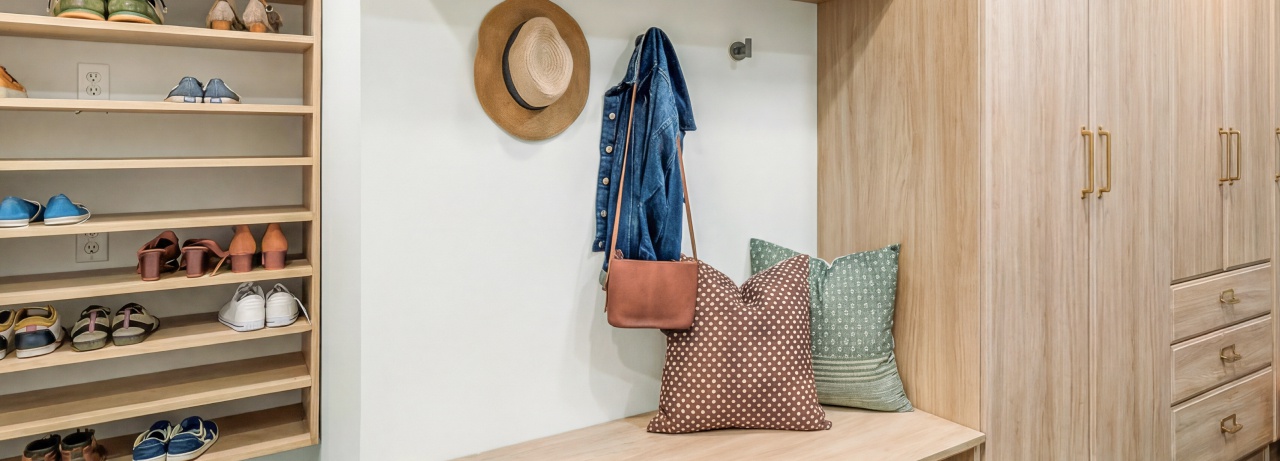
3. Adjustable Shoe Shelving: Flexible, Visible Storage
Shoes are often the biggest source of entryway clutter. Adjustable shelving gives you a way to manage them without committing to a fixed layout.
- Easily switch between sandals, sneakers, and boots
- Keep pairs visible so nothing gets lost or forgotten
- Maximize vertical space, especially in smaller entryways
This type of flexibility is especially useful as seasons (and routines) change.
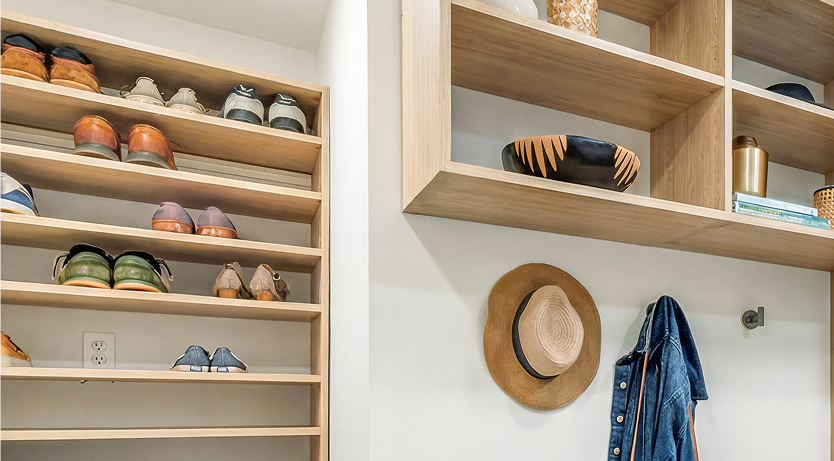
Shoes are often the biggest source of entryway clutter. Adjustable shelving gives you a way to manage them without committing to a fixed layout.
- Easily switch between sandals, sneakers, and boots
- Keep pairs visible so nothing gets lost or forgotten
- Maximize vertical space, especially in smaller entryways
This type of flexibility is especially useful as seasons (and routines) change.
4. Closed Storage: A Clean, Built-In Look
Not everything needs to be on display. Closed storage helps balance function with a more polished look.
- Conceals off-season items, bulkier gear, or everyday clutter
- Keeps the space feeling calm and uncluttered
- Works well for entryways that are visible from main living areas
This is where you can “hide the mess” while still keeping everything accessible.
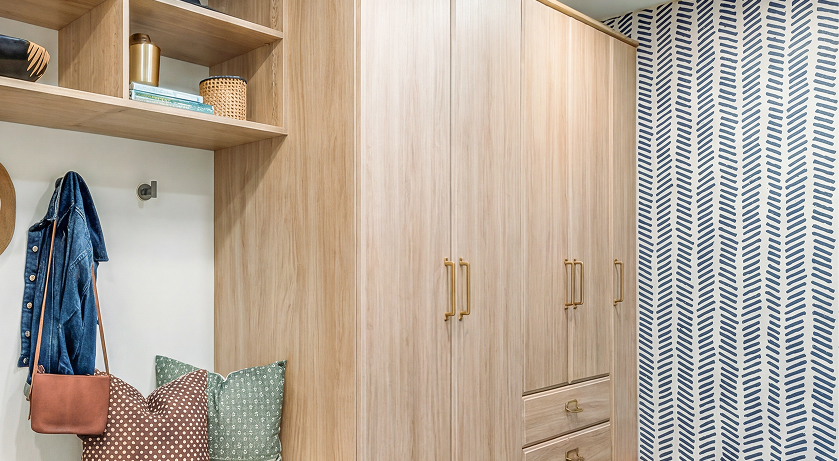
Not everything needs to be on display. Closed storage helps balance function with a more polished look.
- Conceals off-season items, bulkier gear, or everyday clutter
- Keeps the space feeling calm and uncluttered
- Works well for entryways that are visible from main living areas
This is where you can “hide the mess” while still keeping everything accessible.
5. Soft-Close Drawers: Organized, Out-of-Sight Storage
Drawers are ideal for smaller items that tend to pile up quickly.
- Store keys, sunglasses, gloves, and everyday essentials
- Keep surfaces clear and organized
- Soft-close hardware adds a smoother, quieter experience
Think of drawers as your dedicated drop zone—everything has a place and nothing is left out.
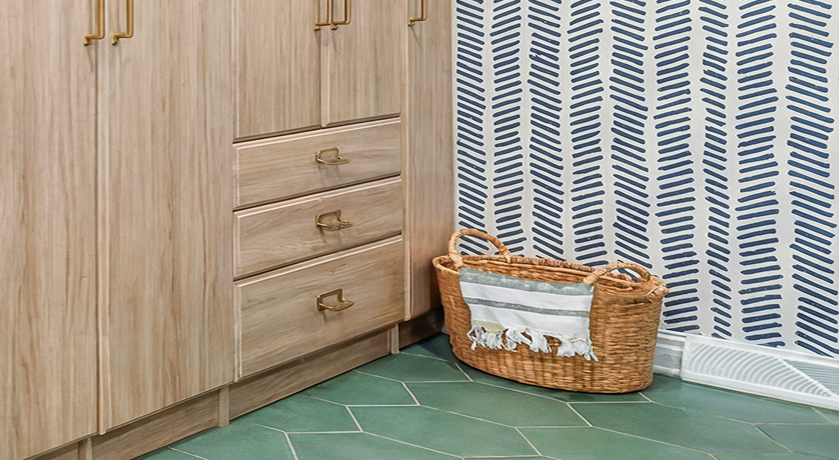
Drawers are ideal for smaller items that tend to pile up quickly.
- Store keys, sunglasses, gloves, and everyday essentials
- Keep surfaces clear and organized
- Soft-close hardware adds a smoother, quieter experience
Think of drawers as your dedicated drop zone—everything has a place and nothing is left out.
Customer Entryway Projects
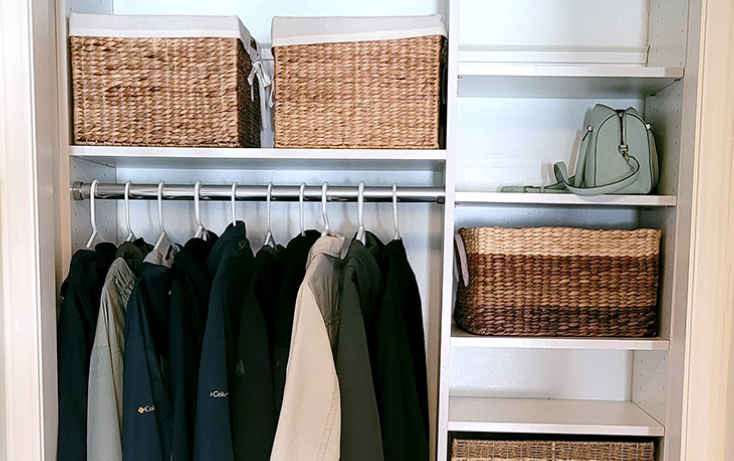
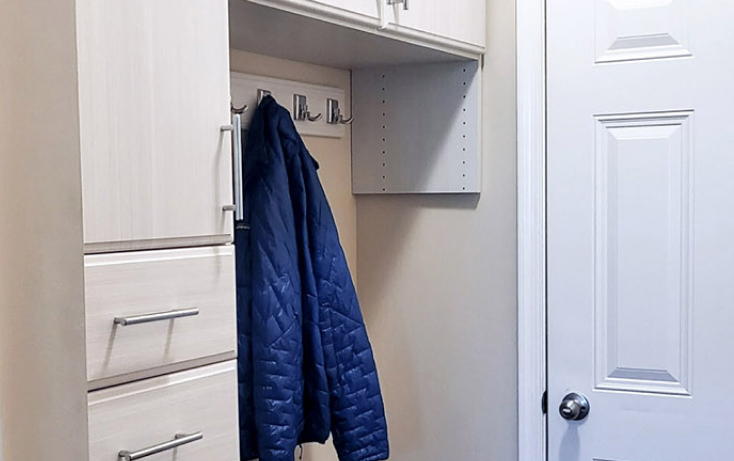
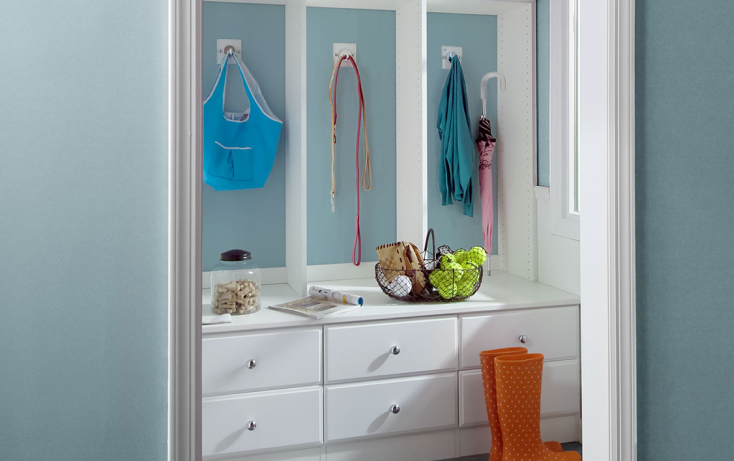
Every home has different challenges, but a well-designed entryway can make daily routines easier no matter the layout. Explore how four customers transformed their entryways with custom solutions designed around their unique needs.
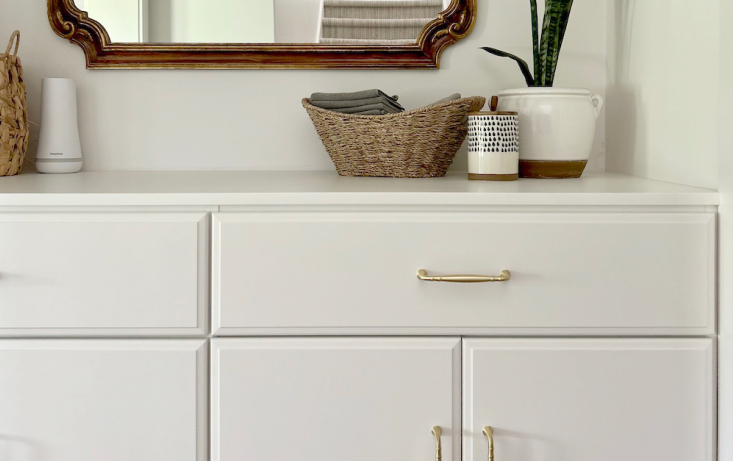
Personalize Your Entryway Design
Once the functional elements are in place, bring in details that make your space feel like home.
- Add a mirror to reflect light and make your space feel larger
- Incorporate artwork or family photos for a personal touch
- Use rugs or runners to add warmth and protect your floors
A thoughtful design balances function and style, so your entryway works well and feels welcoming. By focusing on your space, your routine, and the right combination of storage solutions, you can create a functional entryway design that keeps your home organized from the moment you walk in.
Whether you’re updating a small entryway or a full mudroom, the goal is the same: a space that supports real life, every day.
[Get Started for Free]